
- Sakal India Foundation
- December 5, 2025
Table of Contents
Why Education Decisions Feel So High-Stakes
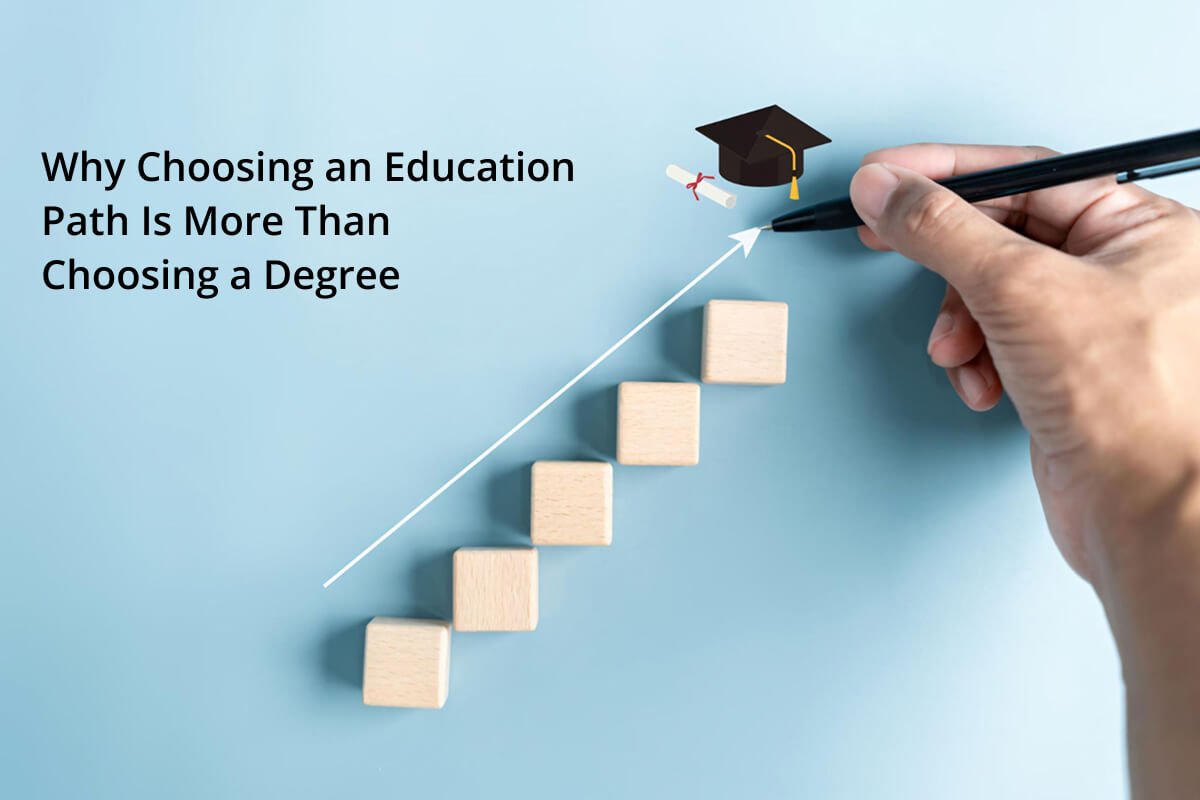
Few decisions feel as heavy, scrutinized, or emotionally charged as choosing an education path. Whether it is selecting a school, a degree, or a field of study, the pressure surrounding education choices is intense.
This sense of high stakes arises different sources. Society frequently presents instruction as of highest quality-opportunity gateway to achievement, indicating that a “wrong” choice can forever wreck one’s future. Families, often accompanying good purposes, project their hopes, fears, and sacrifices upon these decisions. There is too the unending suggestion: instruction is linked to course alternatives, revenue stability, public rank, and even private correspondence. Because the outcomes appear aloof still irrevocable, uncertainty feels dangerous. This blend of anticipation, fear, and perceived continuity turns instruction into a resolution that feels far more it often really is.
The Common Mistake: Reducing Education to a Degree
In conversations about education, degrees frequently become the focal point. Titles, institutions, and credentials are often treated as the final measure of success.
When instruction is weakened in a way, knowledge becomes subordinate to marking. Degrees evolve into shortcuts for judgment—markers of intelligence, ability, or worth—alternatively likenesses of a education journey. This mindset disregards the real knowledge of instruction: the thinking skills grown, the practices made, and the exposure acquire. It still reassures contrasting over curiosity. When the focus act the authorization alternatively the process, pupils may chase influence a suggestion of correction progress, missing time that better join accompanying their interests and substances.
What an Education Path Actually Includes
An education path is far more complex than a syllabus or qualification. It quietly shapes how a person thinks, works, and navigates the world.
It involves the abilities grown, in the way that critical thinking, ideas, logical, and cooperation. It shapes the mindset, doing assurance, elasticity, interest, and openness to education. Education determines uncovering—to plans, cultures, regimens, and habits of thinking that extend perspective. It further builds networks, joining learners accompanying peers, teachers, and professional communities. These factors frequently have a better general impact than the name of the degree itself.
Education as Identity Formation
Education does not just prepare people for jobs; it plays a powerful role in shaping identity.
Through education, individuals begin to see themselves in certain ways—capable or inadequate, curious or disengaged, confident or hesitant. Success or struggle within an educational environment can deeply influence self-perception. Fields of study often become part of personal identity, shaping how people introduce themselves and how they believe they fit into society. When education aligns with interests and strengths, it reinforces confidence. When it doesn’t, it can quietly erode self-belief, even if external success is achieved.
Skills vs Credentials: What Really Lasts
Credentials may open doors, but skills determine how far someone can walk through them.
In a rapidly changing world, specific job roles and qualifications evolve quickly. What lasts are transferable skills—learning how to learn, adapting to new information, thinking critically, and communicating effectively. These skills allow individuals to pivot when industries shift or opportunities change. Credentials may signal readiness at one point in time, but adaptability and problem-solving determine long-term relevance. Education that prioritizes skills over status prepares individuals not just for their first job, but for an entire working life.
Interests, Strengths & Natural Inclinations
Sustainable learning is rooted in alignment between what engages the mind and what the learner is naturally inclined toward.
Interests spark motivation, making effort feel meaningful rather than forced. Strengths determine how quickly and confidently skills develop. Natural inclinations—toward analysis, creativity, empathy, or structure—shape how individuals approach problems. When education aligns with these factors, learning becomes energizing rather than draining. Misalignment, on the other hand, often leads to disengagement, even in prestigious or “safe” fields. Understanding this alignment is key to making education a source of growth rather than struggle.
Learning Styles and Personal Fit
Not everyone learns in the same way, and ignoring this reality can undermine even the best educational intentions.
Some learners thrive in structured environments, while others excel with flexibility and autonomy. Some learn best through theory, others through application. Teaching methods, assessment styles, and classroom culture all affect engagement and outcomes. When there is a poor fit between learner and learning environment, motivation drops and confidence suffers. Choosing an education path that respects how one learns—not just what one learns—significantly improves both performance and satisfaction.
Career Outcomes vs Life Satisfaction
Education decisions are often framed purely in terms of employability, but careers are only one part of life.
A field may offer strong job prospects yet leave individuals feeling disconnected or unfulfilled. Life satisfaction depends on more than income—it includes meaning, autonomy, work-life balance, and alignment with values. Education influences daily routines, stress levels, and long-term well-being. While employability matters, fulfillment determines whether success feels worthwhile. Education paths that consider both tend to support healthier, more sustainable lives.
The Role of Environment, Mentors & Exposure
Learning does not happen in isolation. The surrounding environment quietly shapes outcomes in powerful ways.
Supportive teachers can ignite curiosity and confidence. Peers influence motivation, ambition, and perspective. A learning culture that encourages exploration rather than competition fosters deeper engagement. Exposure to real-world applications, diverse viewpoints, and practical experiences helps learners connect theory to life. These elements often matter more than rankings or reputations, yet they are frequently overlooked in decision-making.
Pressure from Society, Family & Comparisons
External pressure is one of the strongest forces shaping education choices—and one of the least examined.
Families may push for stability, prestige, or familiarity, often reflecting their own experiences or fears. Society reinforces narrow definitions of success through comparisons, rankings, and income metrics. Social media amplifies this pressure by showcasing curated achievements. Under such influence, individuals may suppress their own preferences to meet external expectations. This distortion can lead to choices that look successful on the surface but feel misaligned internally.
Short-Term Choices, Long-Term Consequences
Education decisions may be made early, but their effects ripple outward over time.
Early choices shape habits—how one approaches learning, handles challenge, and responds to failure. They influence confidence and willingness to explore new paths. While no decision is irreversible, initial directions often set momentum. Choosing environments that encourage growth, curiosity, and resilience creates long-term advantages, even if the specific field changes later. The goal is not perfection, but a foundation that supports evolution.
Why One Path Doesn’t Suit Everyone
There is no universal formula for educational success, because learners and lives are diverse.
People differ in goals, resources, responsibilities, and values. Some prioritize stability, others exploration. Some thrive in academic settings, others in applied or vocational paths. Life contexts—financial constraints, caregiving roles, cultural expectations—also shape what is feasible. Assuming one “best” path ignores this diversity and creates unnecessary comparison. Education works best when it respects individual differences rather than forcing conformity.
Education in a Rapidly Changing World
The world education prepares people for is changing faster than ever before.
Careers evolve, industries emerge and disappear, and technology reshapes work continuously. This reality makes lifelong learning essential. Education is no longer a phase that ends in early adulthood; it is an ongoing process. Adaptability, curiosity, and willingness to reskill are more valuable than static knowledge. Education paths that cultivate flexibility prepare individuals to navigate uncertainty with confidence rather than fear.
How to Think Long-Term While Deciding Today
Making education decisions requires balancing present realities with future possibilities.
Focusing on learning ability rather than fixed outcomes builds resilience. Seeking exposure before commitment—through internships, short courses, or conversations—reduces blind decisions. Allowing flexibility and evolution acknowledges that interests and goals change. Long-term thinking does not mean predicting the future perfectly; it means choosing paths that leave room to grow, pivot, and adapt.
Questions to Ask Before Choosing an Education Path
Clarity emerges from asking the right questions, not from chasing the right answers.
What am I curious about long-term, beyond immediate rewards? What skills do I want to build that will serve me across roles and industries? How do I learn best—through structure, experimentation, collaboration, or independence? What kind of life do I want to live, not just what job do I want? These questions shift focus from external validation to internal alignment.
FAQs About Education Paths and Degrees
Education choices often feel overwhelming because they sit at the intersection of identity, livelihood, and long-term security. These frequently asked questions address the most common concerns with honesty and clarity.
Q1. Is a degree still important today?
A degree is still important—but not in the way it once was assumed to be. In many fields such as medicine, engineering, law, academia, and regulated professions, a degree remains essential because it provides standardized training, ethical grounding, and legal qualification. In these cases, a degree is not just a credential; it is a necessary foundation.
However, in many other fields—technology, design, entrepreneurship, media, and emerging industries—the degree is only one part of the picture. Employers increasingly look for demonstrable skills, problem-solving ability, adaptability, and real-world experience. A degree may help open doors initially, but it does not guarantee long-term relevance or success. What ultimately matters is how well the education experience has helped an individual think, learn, and evolve.
Q2. How do I choose between passion and practicality?
This question is often framed as a strict either-or choice, which creates unnecessary tension. Passion and practicality are not opposites; they exist on a spectrum and often overlap.
Passion provides motivation, persistence, and meaning. Practicality provides stability, resources, and sustainability. The challenge is not choosing one over the other, but understanding how they can support each other. For example, a practical field pursued without interest may lead to burnout, while a passion pursued without any planning may create financial stress. A thoughtful education choice explores how interests can be developed into viable skills and how practical considerations can support long-term engagement rather than suppress it.
Q3. Can education paths change over time?
Yes, and they often do. The idea that education is a single, irreversible decision is outdated. Many people change majors, pursue additional qualifications, or shift careers entirely as they grow and gain clarity.
Education today is more modular and flexible than ever. Short courses, certifications, online programs, and experiential learning make it possible to adapt and evolve. Changing paths is not a sign of failure; it is often a sign of self-awareness. Each phase of education contributes something—skills, perspective, confidence—that informs the next step. Growth rarely follows a straight line.
Q4. What if I choose the “wrong” path?
The fear of choosing the “wrong” path often stems from the belief that mistakes are permanent. In reality, very few education choices are irreversible.
Even paths that feel misaligned teach valuable lessons. They clarify preferences, build transferable skills, and strengthen decision-making. What matters more than avoiding mistakes is developing the ability to reflect, adapt, and course-correct. Many successful and fulfilled individuals attribute their clarity to experiences that initially felt like wrong turns. Education is not about getting it right the first time; it is about learning how to navigate complexity with resilience.
Q5. How can parents support better education decisions?
Parents play a powerful role, often unintentionally. Support begins with listening rather than directing. When parents create space for exploration and honest conversation, young people feel safer expressing uncertainty and curiosity.
Encouraging exposure—through internships, conversations, and real-world experiences—helps children make informed decisions. It is also important for parents to separate their own aspirations or fears from their child’s journey. Valuing growth, learning, and well-being over comparison or prestige fosters confidence. The most supportive role parents can play is to be guides, not architects, of their child’s education path.
Key Takeaways
Education decisions carry weight because they shape more than careers—they influence identity, confidence, and direction. Learning, skills, and mindset matter far beyond degrees and titles. Alignment between interests, strengths, and environment leads to sustainable growth and satisfaction. The best education path is not the most prestigious or conventional, but the one that supports who you are becoming, not just what you are achieving.




Post a Comment