
- Sakal India Foundation
- April 15, 2026
Table of Contents
What Are the Barriers to Higher Education in India?
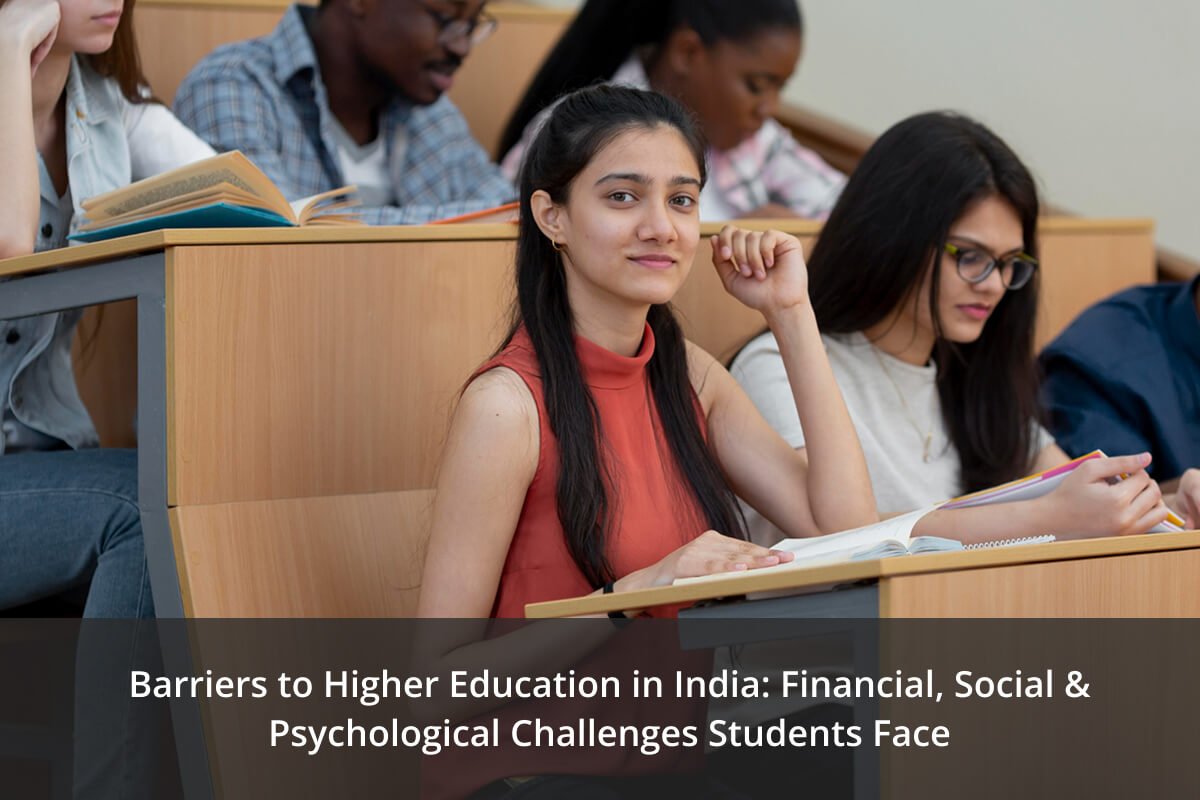
A high number of Indian students want to study at universities yet face several obstacles that prevent them from achieving their goal. The obstacles which people face extend beyond their financial situation because they originate from social systems and their personal challenges which create barriers to their chances.
Definition of Education Barriers
Education barriers are obstacles which prevent students from starting their higher education studies and from continuing their studies and from completing their studies. These restrictions on learning opportunities emerge from three different sources which include economic conditions and societal norms and individual circumstances.
Types of Barriers (Financial, Social, Psychological)
Financial barriers exist because students must pay high tuition fees and schools do not offer enough scholarships. Social barriers prevent people from achieving their goals because gender bias and cultural expectations and family support networks impede their progress. Psychological barriers include three main factors which are low confidence and stress and fear of failure.
Scope of the Problem in India
The education system in India faces challenges because many students who drop out after school because of these barriers. The educational gap between various groups of people keeps expanding because rural areas and marginalized communities and economically weaker sections experience educational difficulties.
Impact on Students and Society
Students who miss career opportunities and personal development because society lacks skilled workers. The situation restricts economic development while creating a permanent cycle of poverty and social inequality.
Why Addressing These Barriers Matters
The removal of these barriers will enable millions of students to reach their full potential. The process results in an educated workforce which decreases social inequality while advancing the development of the nation throughout the years.
Why Access to Higher Education Remains Unequal
The expansion of higher education in India has been successful but it still fails to provide equal access to all people. The deep-rooted inequalities that exist in society today dictate which individuals receive educational opportunities and which ones face educational barriers.
The different levels of access to higher education after high school arise from four factors which include income, location, awareness, and systemic limitations.
Socioeconomic Inequality
Higher education becomes an unattainable goal for most students because they must deal with substantial financial obligations. The costs which include fees and rent and travel expenses and essential study materials create financial difficulties for families who already face economic challenges. Students must interrupt their academic programs because they require immediate employment to support themselves or their family members.
Regional Disparities
The location of a student determines the educational opportunities which become available to them. Cities and towns which have smaller populations together with their surrounding rural areas still face challenges when it comes to obtaining top universities and skilled teachers and suitable educational facilities. Students who want to pursue college education face two choices which require them to either accept limited choices or travel long distances from their hometowns.
Limited Access to Resources
Numerous students lack essential resources which include internet access and educational guidance and high-quality educational institutions. Their studying abilities for competitive exams and their chances of succeeding in admissions tests will be diminished.
Lack of Awareness
Students begin their educational journey without any understanding of the available career paths. Students have no understanding about the various academic programs and scholarship opportunities and potential professions which they can pursue. People need proper assistance at the correct moment to create a pathway which leads them to future success.
Structural Challenges
The system experiences two major challenges which include limited available seats and complicated processes for admission and insufficient educational facilities. These challenges make it harder for deserving students to access higher education.
Financial Barriers to Higher Education
Students face their most significant barrier to higher education because of their inability to pay for college expenses instead of their college readiness. The total expenses of educational programs include more than just tuition fees, which makes it challenging for families to fund their children’s educational journeys over multiple years.
The financial burdens that students face not only postpone their educational progress but also lead many students to abandon their academic ambitions. The gap becomes even wider for those from low-income backgrounds.
High Tuition Fees
For many families the cost of professional college courses which requires students to pay for their education becomes an unmanageable financial burden. The fees become so expensive that students cannot pay them in full at once which causes higher education expenses to become unaffordable for students who show potential to succeed.
Cost of Living and Accommodation
Studying away from home brings a whole new set of expenses. The combination of rent and food and travel and everyday needs creates expenses which exceed initial educational costs.
Lack of Financial Aid Awareness
A lot of students simply don’t know what support is available to them. Scholarships and grants and government programs provide financial assistance to students but many students fail to access these resources because they lack proper guidance.
Limited Access to Loans and Scholarships
Scholarships Financial assistance becomes available to students but obtaining that help proves difficult. The loan process involves complicated procedures which take a long time to complete while scholarship opportunities remain limited which prevents many students from receiving the necessary assistance.
Burden on Low-Income Families
Families with limited financial resources face intense difficulties when they try to pay for their children’s college education. Students in many situations must begin working at an early age to provide for their families which forces them to pause their educational journey.
Social and Cultural Challenges Students Face
Students who want to obtain higher education face challenges that depend on their financial situation and their educational opportunities but also rely on their childhood environment. The decisions they make about their future path get determined by social expectations and cultural norms. These pressures create hidden constraints that restrict student ambition because traditional path requirements take precedence over their personal objectives.
Family Expectations and Responsibilities
Students need to do household tasks after which they should begin their work duties. In those circumstances, students view education as an unnecessary expense instead of their main academic requirement.
Cultural Norms and Restrictions
Tradition prevents certain communities from pursuing specific career options and their associated educational programs. The established unwritten rules of this system prevent students from pursuing educational paths which exist outside the accepted boundaries.
Gender Bias in Education
Girls encounter more obstacles which prevent them from pursuing further education than other students. The combination of early marriage and safety concerns and the belief that education needs less investment makes their advancement impossible.
Social Pressure and Comparison
Students feel compelled to fulfill social norms while they assess their progress by comparing themselves to others. The resulting stress and self-doubt creates obstacles which prevent them from achieving their personal development goals.
Lack of Role Models
Students who attempt to believe their higher education goals are achievable face difficulties because their background group lacks visible successful academic examples. Students need role models who share their background because they help students develop self-confidence and reach their full potential.
Psychological Barriers Impacting Students
Students face challenges that exist beyond their visible boundaries. Many students experience difficulties because their thoughts and emotions create silent obstacles that prevent them from achieving success in higher education. The internal barriers of students can restrict their progress at the same level which financial and social obstacles restrict their progress.
Fear of Failure
The strong need to achieve success creates an environment that makes students afraid to fail. The students experience overwhelming pressure which prevents them from studying because they fear making mistakes.
Low Confidence and Self-Doubt
The absence of higher education exposure in their surroundings causes students to doubt their academic capabilities. The students experience a decline in academic confidence when they perceive themselves as outsiders in educational settings.
Stress and Anxiety
Students face academic difficulties because they need to manage their studies while handling financial obligations and fulfilling family demands. The original stress develops into unending tension which results in anxiety that disrupts their academic performance and daily activities.
Lack of Motivation
Students face difficulty because they encounter multiple challenges which create obstacles. The students will drop their career objectives because they lack essential guidance and support which helps them maintain their enthusiasm.
Mental Health Challenges
The student experience receives interruption through feelings of burnout or isolation or depression. The struggles that people face become hidden yet they require assistance to proceed with their educational journey.
Impact of Barriers on Students’ Futures
When students face obstacles in accessing or continuing higher education the effects extend beyond academic settings because it determines their future life path. The challenges which students encounter during their educational journey restrict their ability to achieve success in personal and professional environments.
Limited Career Opportunities
Higher education requirements restrict student access to employment options which limits their ability to work in skilled professions and follow their desired career paths.
Reduced Income Potential
Education serves as a fundamental factor that determines a person’s ability to earn money. Students who are unable to continue their studies may find it difficult to secure well-paying jobs which will affect their financial stability throughout their lives.
Increased Dropout Rates
Students often drop out of school because they face obstacles which include financial pressures and social expectations and mental health issues. Students who exit the educational system find it hard to reenter school.
Loss of Talent and Potential
The educational barriers which exist in the current system prevent many talented students from achieving their maximum potential. The societal impact extends beyond individual loss because it affects everyone in the community.
Long-Term Socioeconomic Impact
The educational system experiences increased inequality when multiple students leave school which results in decreased economic development. The solution to this problem requires organizations to remove all current barriers which will create a more equitable and inclusive space.
Rural vs Urban Education Gap
The education system in India shows clear distinctions between its rural and urban educational systems, which become most apparent during higher education studies. A student’s available opportunities in life get determined by their place of residence during childhood.
Students in rural areas face educational challenges because they lack the same opportunities that cities provide through their wider range of educational resources.
Access to Institutions
The urban environment contains more colleges and universities than rural areas which provides students with greater educational options. Students in rural areas must either travel long distances or move to new locations so they can pursue their studies.
Availability of Resources
City students benefit from improved access to libraries and tutoring centers and professional educators. The rural population faces difficulties because essential support systems are either nonexistent or hard to find.
Infrastructure Challenges
Urban educational institutions offer advanced infrastructure which includes complete classroom facilities and laboratory equipment and transportation systems. The educational process in rural areas experiences difficulties because of insufficient infrastructure development.
Digital Divide
Urban areas provide their residents with better internet connectivity and digital technology compared to other locations. Students from rural areas encounter internet problems which prevent them from accessing online educational resources and information.
Awareness Differences
Students in urban areas obtain more information about professional paths and educational opportunities which they can choose from. The absence of proper guidance in rural regions restricts people from discovering available options which affect their future decisions.
Gender-Based Barriers in Higher Education
The availability of higher education institutions shows different access patterns for various groups while gender differences continue to determine educational opportunities. Despite achieving some advancements, girls still confront multiple obstacles which restrict their educational progress.
Societal Expectations
Guidelines which society establishes for people to follow. In many families, girls grow up being told that their main role is at home. The family requires their attention for all duties which come to them and they will study only when there is time available. Their personal aspirations become less important to them as time goes by.
Safety Concerns
Parents experience constant safety concerns which they consider to be actual dangers. Traveling to college, especially in another area or city, can feel risky. Families choose to keep girls closer to home because they believe it makes their daughters safer even though this decision limits their available options.
Early Marriage Pressure
In some places, marriage is seen as the next step for girls soon after school. The decision leads to education disruptions which continue until complete termination of studies occurs, despite the girl’s plans.
Limited Opportunities for Girls
Girls receive career guidance which limits them to a specific set of jobs that society finds acceptable. The system forces them to choose careers which society considers proper instead of pursuing their real passions and strengths which would help them develop.
Need for Gender-Inclusive Policies
Girls achieve real progress when they experience an environment which provides protection and encouragement and support. The implementation of improved safety protocols and scholarship availability and equitable access to all professional domains will create opportunities which were previously inaccessible to them.
Role of Awareness and Guidance in Education Access
The main obstacle students face in their education exists because they do not understand which options are available to them. Higher education advancement becomes possible for students when they gain awareness of educational opportunities and receive proper guidance.
Career Counseling Importance
Many students do not know what they want to do after finishing their school education which is a typical situation. The process of career counseling enables students to assess their talents while they investigate multiple career paths until they discover a suitable career which matches their personal interests and professional ambitions.
Awareness of Scholarships and Programs
Students do not have a way to access numerous scholarships and assistance programs because they lack information about these resources. When this information reaches the right people, it can ease financial stress and make continuing education much more possible.
Role of Schools and Institutions
Schools and colleges do more than just teach subjects—they shape a student’s direction. Students who receive proper backing together with guidance and educational materials will acquire the ability to forecast their futures while making improved career choices.
Importance of Mentorship
The presence of a supporter who believes in your potential brings about significant transformation. Mentors support students through their educational journey by providing them with guidance while helping students maintain their self-assurance during difficult periods.
Bridging Information Gaps
Students lose their chance to participate in activities because they remain unaware of these chances. Accessible information distribution systems guarantee that all students receive equal opportunities to advance in their academic pursuits toward higher education.
Role of NGOs in Reducing Education Barriers
NGOs help students from underserved backgrounds because they work to make education accessible to those who need it most. They provide assistance to students through their programs which operate in areas where educational systems lack sufficient resources.
Providing Financial Assistance
NGOs provide financial support to students through three main methods which include scholarships and sponsorships and funding of essential education costs. The financial support assists families by decreasing their expenses which enables students to concentrate on academic work.
Offering Mentorship
NGOs provide financial support to students and also establish mentor relationships to help students progress in their academic development. The program provides students with necessary support to maintain their academic motivation while they deal with obstacles and decide which path to take.
Creating Awareness
Many NGOs operate at the community level to educate people about educational programs and scholarship options and job market prospects. This information enables students and families to discover suitable options for their needs.
Supporting Underprivileged Communities
NGOs concentrate their efforts on helping students who belong to low-income and marginalized communities. The organization develops educational programs which enable all students to learn by tackling the particular difficulties faced by different student populations.
Building Sustainable Programs
NGOs develop educational programs which provide continuous support to students throughout their academic journey instead of creating temporary solutions. The system provides continuous support which leads to permanent educational benefits.
Policy-Level Efforts to Improve Access
Improving access to higher education requires both individual efforts and strong policy backing. Educational institutions and government bodies work together to establish systems which enable educational access for all students.
Multiple initiatives have been launched over time to eliminate obstacles which prevent students from underserved backgrounds from accessing educational opportunities.
Government Scholarship Schemes
Government programs offer financial assistance to students who belong to economically disadvantaged groups. The scholarships decrease tuition expenses which helps students maintain their educational path.
Education Reforms
The education system undergoes reforms to establish learning environments which permit students to learn at their own pace while they study relevant material. The introduction of new curriculum components together with modified admission requirements and evaluation techniques creates improved student learning pathways.
Skill Development Programs
The programs concentrate on skill training that enables students to acquire industry-specific competencies which they need for their future jobs. The initiatives create better pathways which connect educational systems with job market requirements.
Inclusive Education Policies
The inclusive education policies guarantee that students from various backgrounds, which include students of different genders and income levels and geographic areas, receive equal educational opportunities. This process establishes a system which achieves equal distribution of resources and just treatment of all individuals.
Public-Private Partnerships
The partnership between government agencies and private sector entities enables organizations to increase their resource availability and operational capacity. The partnerships enhance educational facilities through their financial support and development of new educational methods.
Practical Solutions to Overcome Education Barriers
The combination of proper support together with awareness and educational planning will enable institutions to assist more students in their academic journey. The implementation of practical solutions will create immediate benefits while solving existing system deficiencies.
Increasing Financial Support
The educational expenses of students and their families will be reduced through the expansion of scholarships and grants and fee assistance programs. The financial aid programs will be increased by making their benefits more accessible which will help students to continue their studies without financial difficulties.
Improving Awareness Programs
The implementation of awareness campaigns on a regular basis will enable students and their families to discover various educational options. The timely delivery of precise information enables them to make improved choices regarding their educational and professional paths.
Strengthening Mentorship
The establishment of strong mentoring systems will provide students with essential support throughout their academic journey. Through their guidance, mentors help students to tackle difficulties while maintaining their drive and creating their future plans.
Enhancing Infrastructure
Educational institutions in rural regions will benefit from improved school and college facilities because these enhancements create optimal learning environments. The educational process depends on students having access to suitable classrooms and educational technology and transportation resources.
Promoting Inclusive Education
The educational system should promote equal chances for all students because this principle represents a fundamental human right. Schools should implement inclusive educational practices to guarantee that every student who faces social or economic or cultural challenges receives proper educational support.
FAQs About Higher Education Challenges in India
Q1. What are the main barriers to higher education in India?
The primary obstacles which prevent people from attaining higher education in India include financial difficulties and social and cultural pressures and the absence of knowledge and psychological obstacles. The combination of these factors creates challenges which prevent students from pursuing their educational goals.
Q2. How do financial challenges affect education access?
The combination of high tuition fees and living costs and financial aid shortages makes higher education expenses impossible for students to pay. The expense of education forces many students to postpone their academic work or completely abandon their studies.
Q3. What role do NGOs play in education support?
NGOs help students through two services which they provide which include scholarships and mentorship programs and information about educational opportunities. The organization works with local communities to help students who need assistance to continue their education.
Q4. How can students overcome these barriers?
Students need to find mentors who will guide them through their challenges while they search for scholarships and learning opportunities which they need to study. The support which schools and NGOs and government programs provide creates significant positive impact.
Q5. Why is higher education important for development?
Higher education enables people to access superior job prospects which lead to increased salary potential. A more knowledgeable and skilled population leads to social and economic progress in society.
Key Takeaways
Multiple factors determine who can access higher education while understanding these factors creates an essential first step which leads to transformative progress. The challenges at hand may appear difficult to solve yet they can be resolved through appropriate assistance and public knowledge. The educational accessibility problem requires all stakeholders, including students, families, institutions, and communities, to work together because the bigger perspective shows its essentiality.
Multiple factors create obstacles for education, which extend beyond financial challenges to include social norms, inadequate knowledge, and individual difficulties. Students experience their educational path through financial aspects and social elements and psychological dimensions which determine their opportunities.
Creating Equal Opportunities Through Education Support
The process of providing equal educational opportunities requires more than creating physical access points because all students must receive necessary assistance to use those access points. Students who possess exceptional abilities face more obstacles from their life situations than their actual talents.
Educational institutions achieve fairness in academic opportunities when they establish proper support systems which include financial assistance, guidance services, and policies that promote inclusion, according to research. The distribution of equal opportunities enables students to develop their full potential while achieving success and making positive contributions to their communities.




Post a Comment